Why a Clear Night With Friends Beats Any Planetarium Show
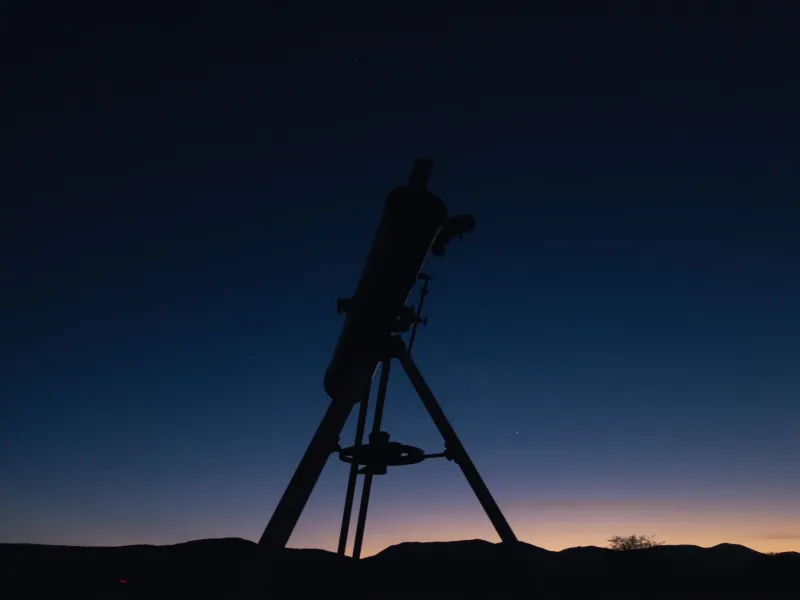
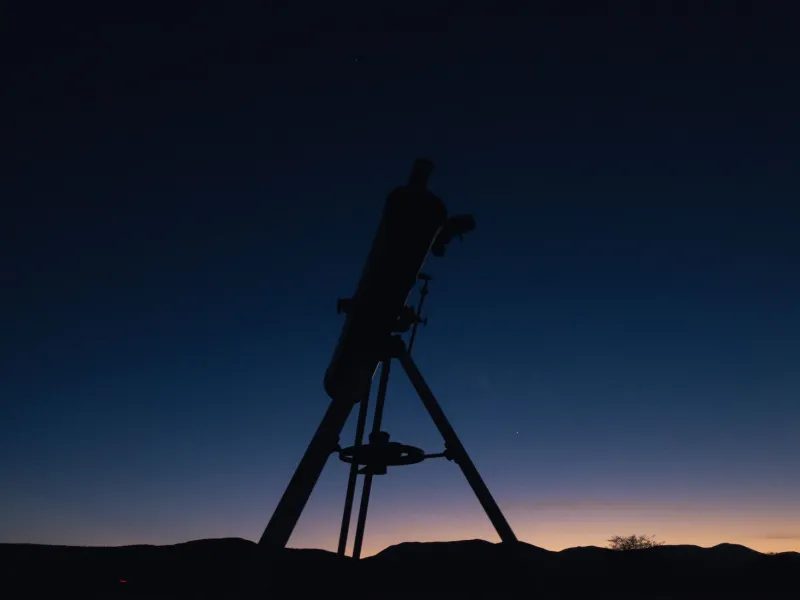
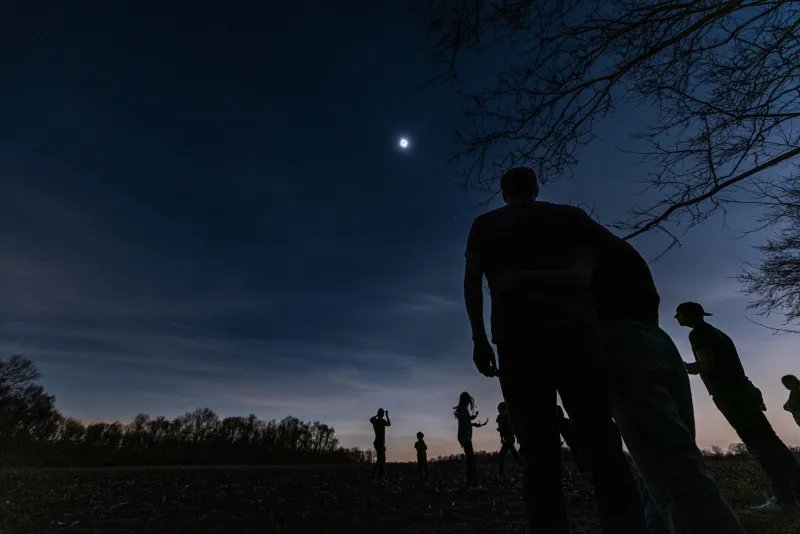
Picture this: you're standing in a dark field somewhere in rural Ohio, surrounded by a handful of people you maybe met six months ago at a local star party. Someone's got a 10-inch Dobsonian pointed at Saturn, someone else is arguing (cheerfully) about whether that smudge near Andromeda is actually M31 or just dew on the eyepiece, and a newcomer is asking questions that nobody has a clean answer to. It's a little chaotic. It's a little cold. And somehow, years later, you remember every single detail.
Now compare that to the last planetarium show you sat through. Comfortable reclining seats. A booming narrator. Stunning visuals projected across a domed ceiling. And yet — do you remember what it was actually about?
You're not alone if the answer is "not really." And it turns out, there's solid science behind why.
Your Brain on Passive Learning
When you sit in a darkened theater and watch a pre-recorded astronomy presentation, your brain is in a relatively relaxed state. The information is being delivered to you. There's no urgency, no uncertainty, and crucially — no stakes. Cognitive scientists refer to this as passive encoding, and while it's not useless, it tends to produce shallower memory traces.
The brain prioritizes information that feels relevant, surprising, or emotionally charged. A narrated tour of the solar system, no matter how beautifully rendered, doesn't trigger the same neurological response as the moment you personally locate a faint galaxy for the first time while your friend is coaching you through the eyepiece.
That second scenario fires up something researchers call elaborative encoding — your brain is actively constructing meaning, connecting new information to existing knowledge, and doing it under mild emotional arousal. That's basically a recipe for long-term memory formation.
The Group Effect: Why Other People Make It Stick
Here's where astronomy clubs and stargazing communities do something that even solo observation can't fully replicate: they introduce the social dimension of learning.
Psychologists have studied what's sometimes called collaborative memory — the way groups of people who share an experience together actually reinforce each other's recall over time. When you talk through what you're seeing with someone else, you're not just communicating — you're consolidating. You're forcing yourself to articulate observations, which deepens your own understanding and creates additional memory anchors.
Think about how different it is to say "I think I can see the Cassini Division" out loud to another person versus just noticing it silently through an eyepiece. The moment you put words to it, you've engaged language centers in your brain, invited feedback, and made the observation socially real. That's a lot more cognitive machinery working on the same piece of information.
Astronomy communities — whether it's a formal club, a loose group of neighbors, or an online crew that meets up for meteor showers — create these moments constantly. The running commentary, the shared confusion, the collective "wait, is that a satellite?" — all of it contributes to richer, more durable memories of what actually happened in the sky.
Real-Time Problem-Solving Changes Everything
One of the most underrated aspects of group stargazing is the problem-solving that happens in real time. Planetarium shows don't ask you to do anything. But out in the field, things go wrong constantly — in the best possible way.
Your star-hopping route doesn't work because you forgot to account for the tree line. The goto mount is misaligned. Someone's red flashlight died and they're fumbling with their star chart. A beginning observer can't find the Pleiades because they don't yet understand how to use averted vision.
Each of these small challenges is actually a memory-forming opportunity. When you work through a problem — especially with other people — your brain tags the whole surrounding context as significant. This is why you can vividly remember troubleshooting a finicky focuser at 2 a.m. in someone's backyard, but you can't recall the third segment of a documentary you watched last month.
Peer teaching amplifies this even further. When an experienced observer explains to a newcomer why they need to let their eyes dark-adapt for 20 minutes before reaching for the eyepiece, both people benefit. The teacher reinforces their own knowledge by verbalizing it. The learner gets the information in a context that's immediately, practically relevant. That's a fundamentally different transaction than a narrator explaining the same concept over a sweeping animation.
Shared Discovery: The Emotional Anchor
Emotion is one of the most powerful memory consolidators the brain has. And there's a particular emotional quality to shared discovery that's genuinely hard to manufacture in a controlled educational setting.
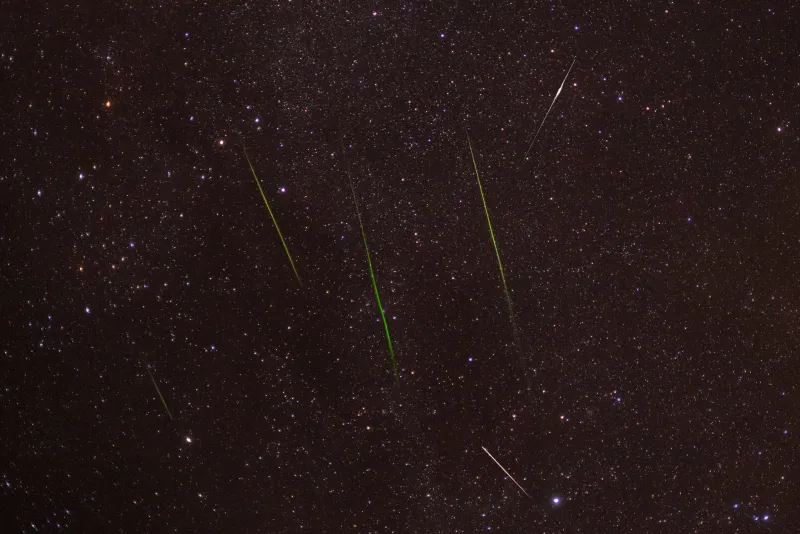
When a group of people watches a meteor streak across Scorpius at the exact same moment — when everyone gasps or shouts at the same time — that shared emotional spike creates what neuroscientists sometimes call a flashbulb memory quality. The event becomes a story. Stories get retold. And retelling, as any memory researcher will tell you, is one of the most effective ways to keep a memory alive and accurate over time.
Planetariums and astronomy documentaries are genuinely wonderful. They reach people who might never otherwise think about the night sky. They're accessible, educational, and often visually breathtaking. But they can't manufacture the electric feeling of being there, of finding it yourself, of turning to someone next to you and saying "do you see what I'm seeing?"
What This Means for Your Astronomy Group
If you're part of a stargazing community — or thinking about joining one — this is worth sitting with. The casual conversations, the collective confusion, the moments where a more experienced member walks a beginner through star-hopping to M13 for the first time: these aren't just nice social moments. They're doing real cognitive work.
Groups that lean into this dynamic tend to build members who genuinely know the sky, not just recognize it. There's a difference between someone who has watched a video about the Orion Nebula and someone who has found it themselves, described it out loud to a friend, and then helped someone else find it the following month.
So the next time your astronomy club is planning a session, don't worry too much about having a perfectly structured agenda or an educational presentation ready to go. The learning happens in the doing — and in the doing together.
The stars are better with company. Turns out, your brain agrees.