Eyes Everywhere: How Amateur Stargazers Are Outpacing the Pros at Catching Variable Stars
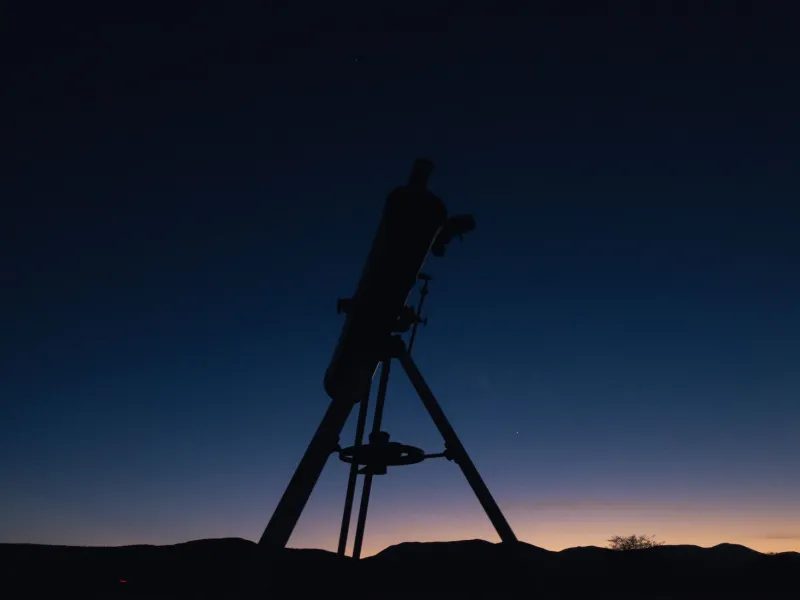
There's a quiet revolution happening in backyards across America every clear night. While professional observatories run sophisticated automated surveys, scanning thousands of stars per hour with robotic precision, they keep missing things. Not because the technology is bad — it isn't — but because the sky is enormous, stellar behavior is unpredictable, and some kinds of discovery still favor the patient human eye over the algorithm.
Variable stars — those that change in brightness over time — are a perfect example. And right now, amateur astronomers are finding them faster than the pros.
What Makes a Star "Variable" (and Why It Matters)
A variable star isn't broken. It's just... dynamic. Some pulsate, expanding and contracting on regular cycles. Others dim when a companion star passes in front of them. Still others flare unpredictably due to magnetic activity on their surfaces. The brightness changes can be dramatic or subtle — sometimes just a fraction of a magnitude — and they happen on timescales ranging from minutes to years.
Tracking these changes matters enormously to professional astronomers. Variable stars help calibrate cosmic distance measurements. Certain types — like Cepheid variables — are literal rulers that scientists use to map the universe. Others are early-warning signs of stellar evolution, novae, or even conditions that could affect nearby exoplanets. The data amateur observers collect feeds directly into models that shape our understanding of how stars live and die.
The American Association of Variable Star Observers, better known as AAVSO and headquartered in Cambridge, Massachusetts, has been coordinating this kind of citizen science since 1911. Their database now holds more than 50 million observations — the vast majority contributed by amateur astronomers.
Why Automated Surveys Keep Missing the Good Stuff
Here's the thing about robotic sky surveys: they're optimized. They're built to do specific jobs efficiently — cataloging millions of objects, flagging large deviations, tracking known targets. That optimization comes with trade-offs.
Automated systems tend to struggle with stars that don't fit expected patterns. A slow, irregular dimming event that unfolds over weeks might not trigger an alert. A star that behaves normally for years before suddenly doing something strange might slip through the cracks between observation windows. And in crowded star fields — dense regions of the Milky Way, for instance — automated photometry can get confused by overlapping light sources.
Human observers bring something different to the table. Pattern recognition. Intuition built from months or years of watching the same patch of sky. The ability to think, "Wait, that doesn't look right," and then actually follow up on it over the next several nights instead of moving on to the next target.
That follow-up behavior is crucial. When an amateur notices something odd, they can point their telescope at that same star again tomorrow night, and the night after that, building a light curve — a record of brightness over time — that tells a much richer story than a single automated snapshot.
Real People, Real Discoveries
This isn't abstract. Amateur observers across the US have made genuine, citable contributions to variable star science.
Gary Poyner, a British observer with decades of experience, has logged more than 200,000 variable star observations and is credited with contributing to multiple published papers. In the American community, observers like Mike Simonsen — a longtime AAVSO leader based in Michigan — have spent years not just observing but actively mentoring newer members and helping coordinate campaigns that produce research-grade data.
Then there's the case of citizen scientists who contributed to the discovery of "Boyajian's Star" (KIC 8462852), the famously weird star whose irregular dimming patterns puzzled researchers for years. Much of the follow-up photometry that helped characterize its behavior came from amateur observers who were alerted through community networks and pointed their backyard telescopes at the right coordinates at the right time.
More recently, distributed networks of amateurs have contributed to campaigns studying recurrent novae — systems that flare brightly and then fade, sometimes on timescales of years. Because these events are hard to predict and short-lived, having observers spread across different time zones and geographic regions dramatically increases the chances that someone catches the outburst near its peak.
The Geographic Advantage Nobody Talks About
Here's something that often gets overlooked: professional observatories are located in specific places. Mauna Kea. The Atacama Desert. The Canary Islands. These are incredible sites with dark skies and stable atmospheric conditions, but they're fixed points on the globe.
Amateur astronomers are everywhere. On any given clear night, observers from Maine to California, from the Florida Keys to the Pacific Northwest, are watching the same stars from different vantage points and different atmospheric conditions. That distributed coverage means that when a professional telescope is clouded out, or pointed elsewhere, or simply not scheduled to observe a particular target, there's a decent chance someone in the amateur community has eyes on it.
This geographic redundancy has real scientific value. Light curves built from observations across multiple locations are more complete and more reliable than those assembled from a single site. And for events that unfold quickly — a nova outburst, a sudden fading event — that redundancy can mean the difference between catching the phenomenon and missing it entirely.
How to Get Involved (You Don't Need Fancy Gear)
One of the most encouraging things about variable star observing is that the barrier to entry is genuinely low. You don't need a research-grade telescope. Many variable star programs accept visual estimates — meaning you're comparing the brightness of a target star to nearby comparison stars with your own eyes, through a modest telescope or even binoculars.
The AAVSO website (aavso.org) is the best starting point for US-based observers. They offer free finder charts, observation submission tools, and a welcoming community of observers at every experience level. Their "Citizen Sky" and related campaigns regularly put out calls for observers to focus on specific targets, which means you can contribute to active research almost immediately after getting started.
Local astronomy clubs are another fantastic entry point. Many clubs have members who are already active variable star observers and can walk you through the process of making your first estimates, submitting data, and understanding what you're actually looking at. If your club doesn't have a variable star program yet, starting one is a great way to give your group a shared scientific mission.
The Human Element Isn't Going Anywhere
Automated surveys will keep improving. Machine learning is getting better at flagging anomalies. Next-generation facilities like the Vera C. Rubin Observatory will scan the sky with unprecedented depth and frequency. None of that is bad news — it's genuinely exciting.
But the history of variable star astronomy suggests that human observers will keep finding things the machines miss. Not because amateurs are better than algorithms at raw data processing, but because curiosity, persistence, and the willingness to spend a cold Tuesday night in November staring at the same star for the third week in a row — that's something you can't fully automate.
The amateur astronomy community has always punched above its weight in this area. And with better coordination tools, more accessible data pipelines, and a growing culture of citizen science, the gap between backyard observer and published contributor has never been smaller.
So if you've been looking for a reason to point your telescope at something a little more purposeful on your next clear night — this might be it. The sky has more to say than any one survey can capture. And you might be exactly the person who hears it.