Alone Under the Stars — But Never Really Alone
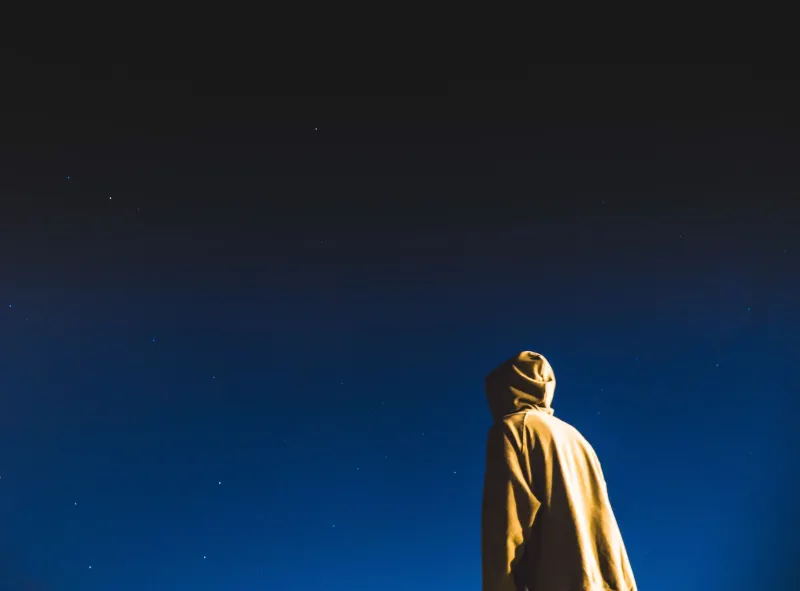
It's 11:30 on a Tuesday night somewhere in rural Ohio. Marcus, a high school history teacher, is standing in his driveway with a folding chair, a thermos of coffee, and a pair of 10x50 binoculars aimed at Orion. His wife is asleep. His kids are asleep. The neighborhood is dark and quiet. By every conventional measure, he is completely alone.
And yet, he doesn't feel that way.
"I always think about the fact that other people are out there watching the same thing," he says. "Not just in Ohio — everywhere. That's a weird kind of company, but it's real."
Marcus isn't describing something unique to him. What he's talking about is a psychological phenomenon that researchers have started paying closer attention to: the feeling of social connection that emerges not from physical proximity, but from shared experience across distance. In stargazing communities, this feeling shows up constantly — and it's worth understanding why.
The Same Sky, Shared Silently
Here's the thing about the night sky that no other hobby can quite replicate: it's universal. When you're watching Jupiter rise over the eastern horizon tonight, so is someone in Portland, someone in Atlanta, someone in a suburb outside of Chicago. The same photons that travel 390 million miles from Jupiter to your eye are hitting the eyes of thousands of other observers at the same moment.
That's not a metaphor. That's physics. And for a lot of solo stargazers, it's also deeply comforting.
Psychologists who study belonging and social connection have long recognized that shared experience — even without direct interaction — can satisfy some of the same emotional needs as in-person community. It's part of why people feel a sense of camaraderie at concerts, why sports fans feel bonded to strangers wearing the same jersey, and why reading a beloved book can make you feel less alone even when you're reading it in an empty room.
Stargazing taps into this same mechanism, arguably more powerfully than most activities. The sky is the same sky. There's no regional variation, no paywall, no version difference. Whether you're in a light-polluted suburb or under a genuinely dark sky in the Texas Hill Country, you and every other amateur astronomer in the country are looking at the same objects.
When Solitude Becomes Something Else
Researchers who study what's sometimes called "parasocial connection" — the sense of relationship formed without direct interaction — have found that it can produce real psychological benefits. Lower feelings of loneliness, greater sense of purpose, even improved mood. The key ingredient isn't the other person's presence. It's the awareness that others exist and share your experience.
For stargazers, this awareness is often cultivated deliberately. Many solo observers describe habits that reinforce their sense of invisible community: checking astronomy forums before heading outside, reading other people's observation logs, posting their own sightings to apps like Cloudy Nights or the community boards on sites like this one. These aren't just information-sharing rituals. They're acts of connection.
Sarah, an IT professional in suburban Denver, puts it plainly: "Before I go out, I always check what other people spotted the night before. It makes me feel like I'm picking up where someone else left off. Like we're passing a baton even though we've never met."
That baton-passing metaphor is more apt than it might seem. Astronomy has always been a cumulative, collaborative science — even at the amateur level. When you log your observations and share them publicly, you're contributing to something larger than your own backyard session. And knowing that, it turns out, changes how the experience feels.
The Loneliness Paradox, Explained
So why do some solo stargazers actually report feeling less lonely than they did before they got into the hobby — even when they're observing entirely on their own?
Part of the answer is community infrastructure. Online astronomy groups, subreddits, Discord servers, and local club newsletters mean that even the most solitary observer is embedded in a web of shared enthusiasm. You go outside alone, but you carry that community with you.
Part of it is also the nature of the sky itself. There's something about confronting the scale of the universe — genuinely sitting with the fact that the light leaving the Andromeda Galaxy started its journey 2.5 million years ago — that recalibrates your sense of isolation. Loneliness is, at its core, a feeling of disconnection from others. But when "others" expands to include every human being who has ever looked up at the same stars, the feeling shifts.
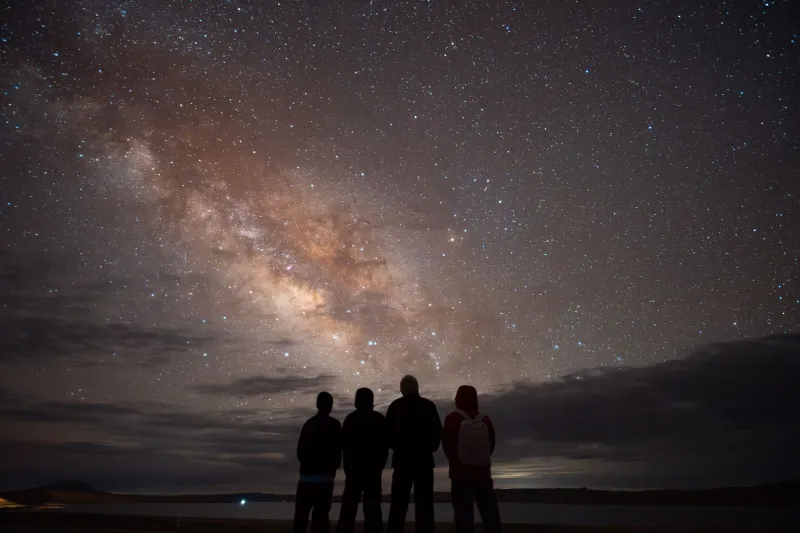
Ancient Egyptians tracked the same constellations. Polynesian navigators read the same stars to cross oceans. Every civilization in human history has looked up at Orion. That's not just trivia — for a lot of stargazers, it's genuinely moving.
"When I'm outside by myself, I never feel like I'm the only one," says Daniel, a retired engineer in Tucson who has been observing solo for nearly twenty years. "I feel like I'm part of something that goes way back and way forward. That's not loneliness. That's the opposite."
How to Deepen the Invisible Connection
If you're a solo observer and this resonates, there are real, practical ways to strengthen that sense of shared experience — without giving up your quiet solo sessions.
Log and share your observations. Platforms like the Astronomy Friends community boards, Cloudy Nights, or even a simple public social media account let your sightings become part of a collective record. Other observers will read what you saw. Some will be inspired to look for the same thing. The connection is real, even if it's asynchronous.
Participate in coordinated observation events. Meteor shower nights, planetary opposition watches, and eclipse viewing events create moments when you know — with certainty — that thousands of other people are outside looking at the same thing at the same time. You don't have to be at a star party to feel that. You just have to know it's happening.
Read others' observation journals. The amateur astronomy community produces an enormous volume of personal accounts, sketches, and logs. Spending twenty minutes reading someone else's description of a night they spent at a dark sky site creates a genuine sense of shared experience, even if you've never spoken.
Check in before and after. A quick look at a community forum before your session — and a short post afterward — transforms your solo night into a conversation across time. Someone will respond. Someone will have seen the same thing.
You're Not as Alone as You Think
Marcus in Ohio finished his observation session around 1 a.m. He didn't see anything extraordinary — Orion was crisp, a few satellites drifted by, and he spent a while just sitting with the quiet. But before he went inside, he posted a short note to an astronomy forum he's been part of for three years: Clear skies in northeast Ohio tonight. Orion looking sharp. Hope everyone else is getting good views.
By morning, seven people had replied. Two were in neighboring states. One was in Arizona. One was in upstate New York.
None of them had been in his driveway. All of them had been under the same sky.
That's the paradox, and it's not really a paradox at all. Solo stargazing, done with even a little intentionality, isn't isolation. It's a quiet, ongoing conversation with a community that spans the whole country — and, on the best nights, feels like it spans a lot more than that.