Know Your Role: How to Find Your Place in Any Stargazing Group
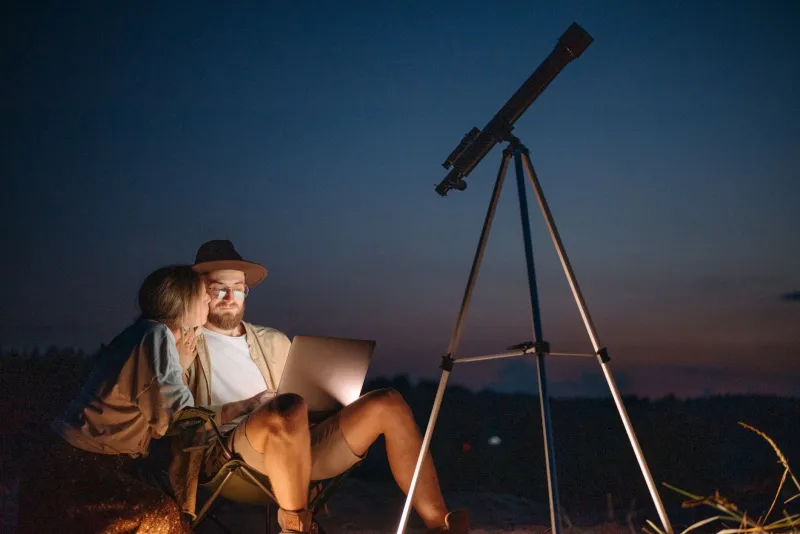
There's a moment that happens in almost every astronomy group — usually somewhere around the third or fourth outing together — where things just click. Someone takes charge of the equipment setup without being asked. Someone else starts explaining what they're looking at to a newcomer in a way that actually makes sense. And somewhere in the background, there's a person making sure everyone has a folding chair and knows where the restrooms are. That moment of quiet coordination? That's a balanced group doing what a balanced group does.
But getting there isn't always automatic. A lot of stargazing crews start out a little lopsided — maybe everyone wants to run the telescope, or nobody wants to plan the outing location. Figuring out what each person genuinely brings to the experience — and building around those strengths — can take a casual group of astronomy enthusiasts and turn it into something that actually lasts.
So let's talk about the different roles that tend to show up in astronomy communities, how to recognize them in yourself and your fellow observers, and how to put it all together into something greater than the sum of its parts.
The Gear Head: Your Group's Technical Backbone
Every group has one. This is the person who researched three different eyepiece brands before buying any of them, who knows the difference between a Dobsonian and a refractor without having to Google it, and who shows up to every session with a red-light flashlight, a collimation tool, and a backup battery pack — just in case.
Gear Heads are invaluable because they lower the barrier to entry for everyone else. When a beginner shows up with a department-store telescope that's wildly out of alignment, the Gear Head quietly fixes it without making anyone feel bad. They're the reason your group's equipment actually works when it matters.
If this sounds like you, lean into it. Offer to help newer members with gear selection before they spend money on something that'll frustrate them. Share what you know without gatekeeping. The best Gear Heads aren't the ones who hoard knowledge — they're the ones who spread it.
The Educator: The Person Who Makes It Make Sense
This role doesn't always go to the most experienced astronomer in the group. Sometimes it's someone who just has a gift for translating complex concepts into plain language. The Educator is the person who can explain why we see different constellations in different seasons, or what a light-year actually means in terms a ten-year-old (or a curious adult) can feel in their bones.
Educators are the people who keep newcomers coming back. There's nothing more discouraging than showing up to your first astronomy event and feeling like everyone else is speaking a different language. A good Educator reads the room, meets people where they are, and makes the night sky feel accessible rather than intimidating.
If you're an Educator, your group needs you at outreach events, public star parties, and any session where new faces are likely to show up. You're the bridge between the sky and the people who haven't yet learned to love it.
The Planner: The One Who Makes It Actually Happen
Left to their own devices, a lot of astronomy groups would meet... eventually... maybe... when someone gets around to checking the weather and picking a dark sky site. The Planner is the person who actually makes things happen. They're checking the lunar calendar weeks out, scouting locations on Google Maps, coordinating carpools, and sending reminder texts the day before so nobody forgets.
This role is chronically underappreciated. Planning a solid stargazing session involves more logistics than most people realize — moon phase, light pollution levels, weather windows, accessibility, and sometimes permits for certain public lands. A good Planner handles all of that invisibly so everyone else can just show up and look up.
If you're a Planner, know that your contribution is just as meaningful as anyone else's. The most spectacular sky means nothing if nobody shows up to see it.
The Social Glue: The Heart of the Group
This person isn't necessarily the most knowledgeable astronomer or the most organized. What they are is the reason people feel like they belong. They're the one who remembers everyone's name, who checks in on the member who missed the last two sessions, who suggests grabbing coffee afterward and actually follows through on it.
Astronomy groups — like any community — live or die by their social fabric. People don't keep showing up for the gear or even the sky. They keep showing up because they feel connected to the other people standing in the dark with them. The Social Glue makes that happen.
If this is your role, embrace it without apology. You might not be able to name every Messier object, but you know that the new member is a little shy and that the veteran in the corner loves talking about astrophotography. That knowledge is social infrastructure, and it matters.
The Observer: The Quiet Anchor
Not everyone in a group needs to be loud about what they contribute. The Observer — and there's usually at least one — is the person who is simply, deeply, reliably present. They show up every time, they're patient at the eyepiece, they don't rush, and they have a way of noticing things others miss. A faint smudge that might be a galaxy. A double star that looked like one. A satellite crossing the field of view at just the right moment.
Observers often have a quiet kind of credibility in a group. When they say something is worth looking at, people listen. Their consistency and attentiveness set a tone that makes the whole experience feel more intentional.
Building a Balanced Group
Here's the thing — most people in astronomy communities play more than one role depending on the night, the crowd, and what's needed. That's actually healthy. But when you're thinking about building or growing your group, it helps to take a step back and ask: what do we have a lot of, and what are we missing?
If everyone's a Gear Head and nobody's a Planner, your sessions might be technically impressive but logistically chaotic. If you've got great social energy but no Educator, new members might feel warmly welcomed but quietly lost. A quick honest conversation with your group about strengths and gaps can surface a lot — and it usually brings people closer together in the process.
You don't need a formal assessment or a personality quiz. Just pay attention over a few sessions. Notice who gravitates toward what. Ask people what they enjoy most about the group experience. You'll start to see the pattern pretty quickly.
The Bigger Picture
Astronomy is one of those rare hobbies that genuinely rewards community. The sky is too big and too complex and too beautiful to experience fully on your own. But a community only works when people feel like they belong in it — not as spectators, but as contributors.
Finding your role isn't about locking yourself into a box. It's about showing up with intention, understanding what you bring, and appreciating what the people around you bring too. That's how a casual group of people who like stars becomes something that actually feels like home.
So next time you're out under a dark sky with your crew, take a second to notice who's doing what. Chances are, the whole thing is working better than you realized — because everyone, in their own way, is holding it together.