Your Group Knows More Than You Do: The Science of Shared Stargazing Memory
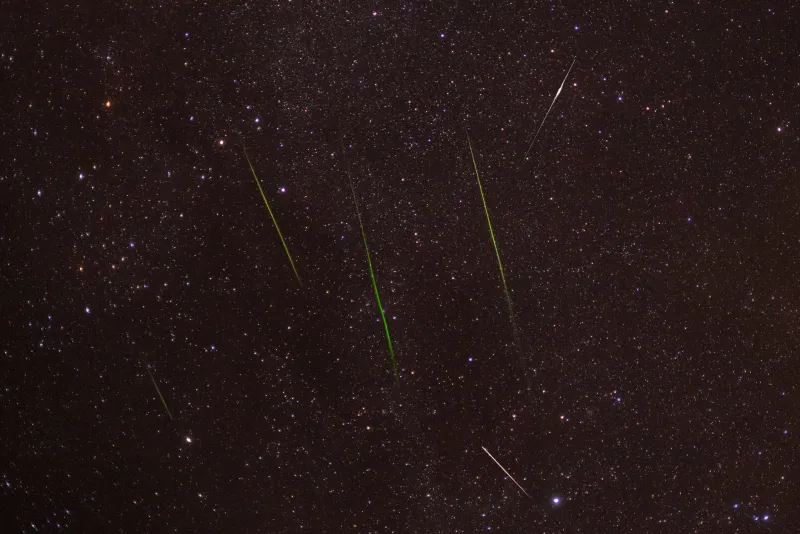
Picture this: You drove an hour out of the city, set up your gear in a dark field, and watched the Perseid meteor shower peak on a warm August night. You saw maybe a dozen streaks. You were pretty sure one had a greenish tail. Or was it blue? By the following weekend, the details were already getting fuzzy.
Now imagine you watched that same shower with six people from your local astronomy club. Between all of you, someone counted 34 meteors. Someone else caught the green one on camera. A third person remembered the exact timestamp. And by the time you all drove home, you'd built a shared story that none of you could have assembled alone.
That's not just a nice anecdote. It's actually how memory — and learning — works best. And for stargazers, it might be one of the most underappreciated arguments for joining a community.
What Psychologists Call "Transactive Memory"
There's a concept in cognitive psychology called transactive memory, first developed by researcher Daniel Wegner in the 1980s. The basic idea is that groups don't just pool information — they actually distribute the job of remembering across members. Each person becomes a kind of specialist, holding onto different pieces of the collective experience.
In a stargazing group, this plays out in surprisingly practical ways. One person might naturally track timing. Another gravitates toward color and brightness. Someone else logs coordinates or sketches what they see. No one assigns these roles — they just emerge. And because everyone knows (consciously or not) that others are covering different ground, each individual observer pays sharper attention to their own corner of the sky.
The result? The group encodes more detail, more accurately, than any solo observer would.
Why Talking About What You Saw Actually Changes What You Remember
Here's where it gets interesting. Research in memory science consistently shows that the act of discussing an experience reshapes how we store it. When you describe what you observed to someone else, you're not just reporting — you're consolidating. You're forcing your brain to organize scattered sensory impressions into a coherent narrative.
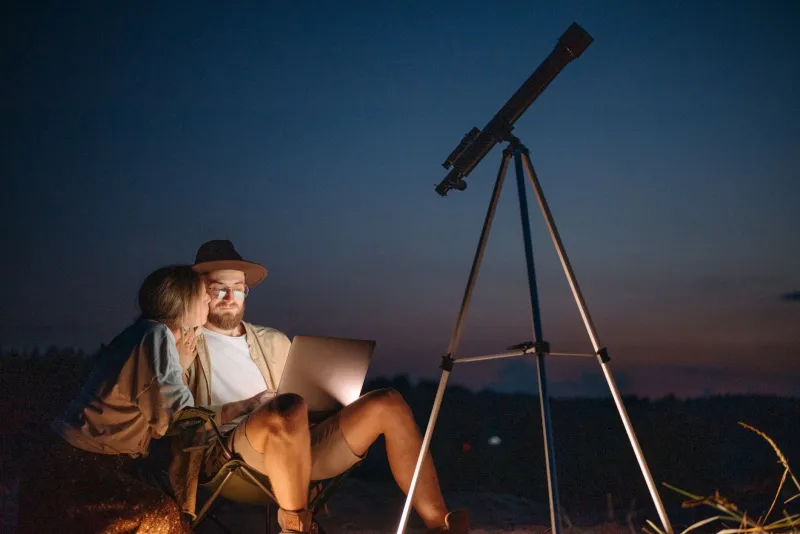
For astronomers, this happens naturally after every shared observation session. You pack up your telescope, someone says "did you catch that double flash near Cassiopeia?" and suddenly everyone's comparing notes. That conversation isn't small talk. It's active memory consolidation happening in real time.
What's more, when someone else describes something you also saw — but describes it slightly differently — your brain gets a second pass at encoding that event. You're essentially re-experiencing it through another perspective, which strengthens the neural pathways associated with that memory. It's like getting a second exposure to a photograph before the darkroom chemicals wash it away.
The "Group Narrative" Effect on Astronomical Knowledge
Beyond individual memory, astronomy communities build something even more powerful: group narratives. These are the shared stories that a club tells itself about what it has witnessed together.
"Remember the night we all saw that fireball over the ridge?" "That was the same session when Martinez spotted the Andromeda Galaxy for the first time with his new scope." These stories become part of the group's identity — and they carry real astronomical information embedded within them.
Cognitive scientists refer to this as "socially shared cognition." When knowledge gets woven into a group's story, it becomes far more durable than anything written in a notebook. Members who weren't even present for an event can absorb accurate details just by hearing the story told and retold at club meetings or around a tailgate.
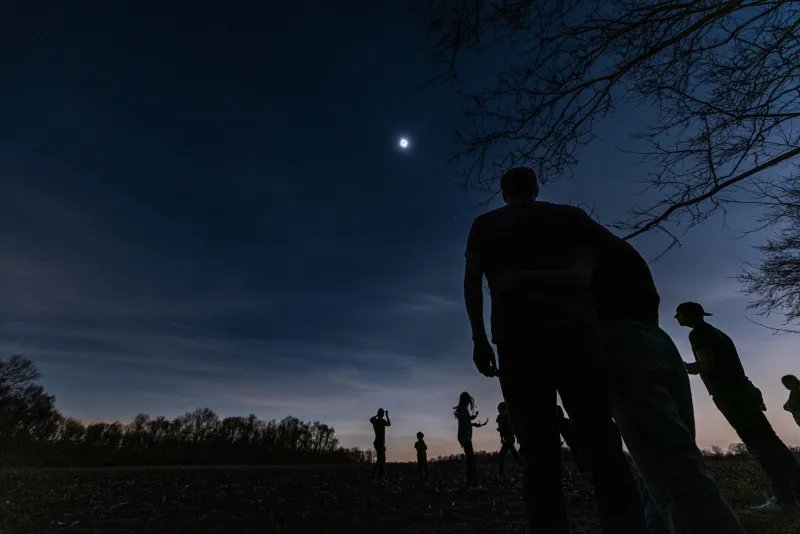
For amateur astronomy specifically, this matters enormously. Celestial events don't repeat on human-friendly schedules. A total solar eclipse, a rare planetary conjunction, a particularly active aurora display — these are one-shot opportunities. A group that has developed strong collective memory practices will extract far more lasting knowledge from each of those events than a collection of isolated individuals ever could.
How Your Club Can Deliberately Strengthen This Effect
The good news is that you don't need a psychology degree to put any of this to work. A few simple habits can dramatically amplify your group's collective memory and knowledge retention.
Debrief out loud, every time. After an observation session — even an informal backyard one — spend fifteen minutes just talking about what everyone saw. Don't worry about being systematic. The conversation itself is the mechanism.
Encourage role diversity. If every member tries to observe everything, you get redundancy without depth. Gently encourage people to develop specialties — timing, sketching, photography, naked-eye observation. The group learns more when its attention is distributed.
Tell your stories at meetings. If your club has regular gatherings, make space for members to recount past observations — not just plan future ones. Every retelling reinforces the group's shared knowledge base.
Write it down together. A shared observation log, even a simple Google Doc, turns individual notes into a collective record. More importantly, the act of co-writing forces the kind of discussion that consolidates memory in the first place.
Bring in newer members. This one surprises people, but explaining something to a beginner is one of the most effective ways to deepen your own understanding. Teaching forces you to reconstruct knowledge from scratch, filling in gaps you didn't even know you had.
The Astronomy Friends Advantage
There's a reason communities like ours exist beyond the obvious social appeal. Yes, it's great to have people to call when a surprise aurora lights up the northern sky. Yes, it's more fun to watch a lunar eclipse with friends than alone on your back porch.
But there's something deeper going on. When you observe with a group regularly, you're not just sharing a hobby — you're building a distributed intelligence. The group becomes, in a very real sense, a better astronomer than any of its individual members.
Your club collectively sees more, remembers more accurately, and retains knowledge longer than you ever would solo. That's not a metaphor. It's neuroscience.
So the next time someone asks why you bother driving out to a star party when you could just set up in your backyard alone, you've got a pretty solid answer: because your group remembers what you'd forget, notices what you'd miss, and builds something out of a shared night sky that none of you could have built on your own.
And honestly? That's a pretty remarkable thing to be part of.