From One Telescope to Many: What Happens When Solo Stargazers Find Their People
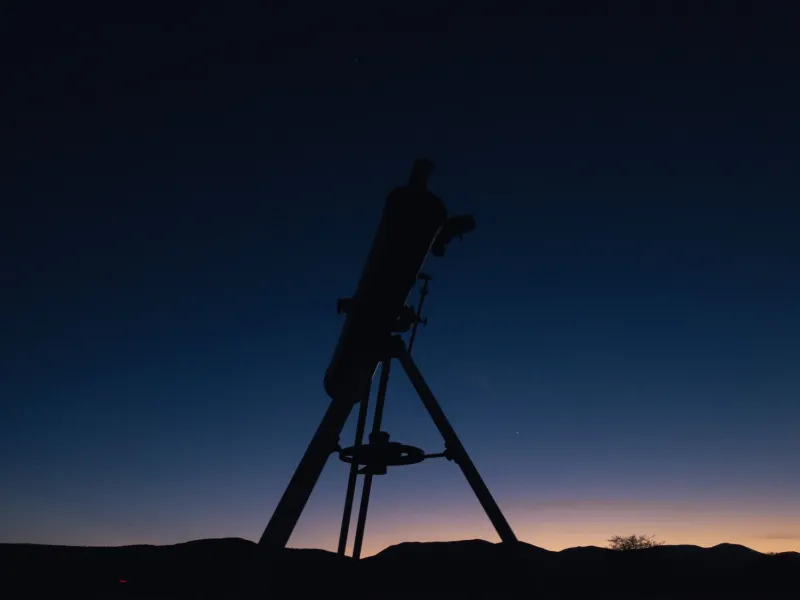
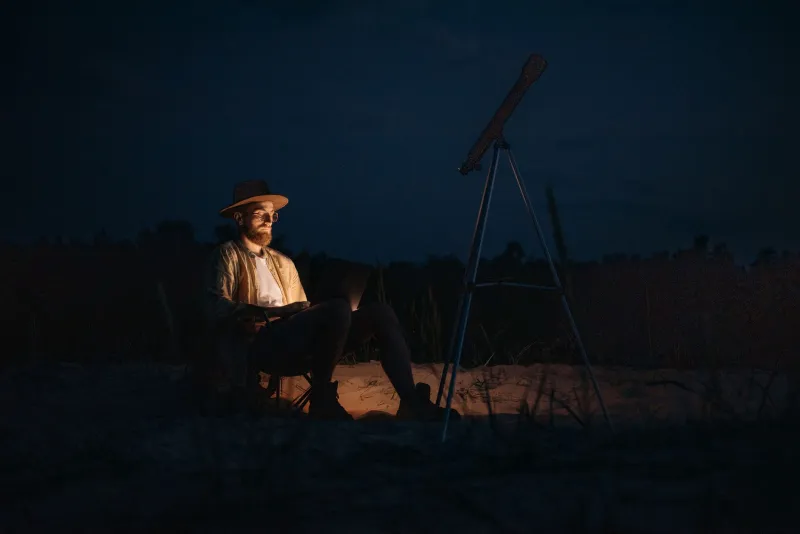
There's something quietly magical about standing alone in a dark field at midnight, the Milky Way arching overhead and your telescope trained on a galaxy 2.5 million light-years away. Solo stargazing has a meditative quality that a lot of astronomy enthusiasts genuinely treasure. Nobody's asking questions. Nobody's bumping into your tripod. It's just you, the eyepiece, and the universe.
And yet — ask almost any committed amateur astronomer when their hobby really took off, and the answer almost never involves a solo session.
"I'd been doing this for two years by myself," says Marcus T., a 38-year-old software engineer from Colorado who now helps run a local astronomy club. "I thought I was doing fine. Then I went to my first star party and realized I'd been misidentifying half of what I was looking at. Someone pointed at what I called 'that fuzzy patch near Andromeda' and said, 'That's M33 — the Triangulum Galaxy.' I felt like a kid who'd been mispronouncing a word for years."
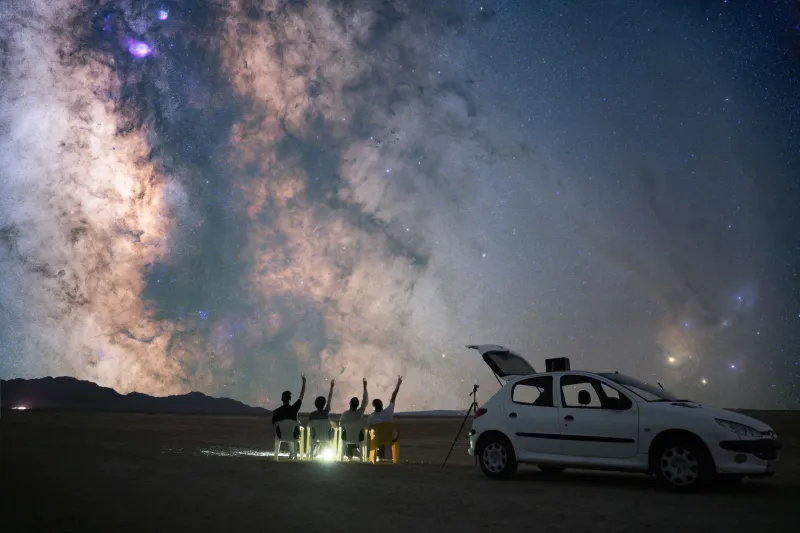
That moment — equal parts humbling and electrifying — is something stargazers describe over and over. Call it the group observation awakening.
The Lone Wolf Problem
Solo stargazing has a subtle limitation that's easy to overlook: you only know what you already know. Without feedback, misidentifications stick. Bad habits with equipment go uncorrected. And the sheer breadth of what's up there — variable stars, double stars, nebulae, clusters, planetary detail — can feel overwhelming without a guide.
Psychologists call this an "echo chamber of self-reference." In plain terms, it means you keep reinforcing your existing understanding without anyone to challenge or expand it. In astronomy, that can mean spending months looking at the same handful of objects simply because you're not sure what else is worth finding.
Group observations break that cycle almost immediately.
"The first time I went out with a club, someone had a 12-inch Dobsonian and they let me look at Saturn through it," recalls Priya S., an amateur astronomer from the Chicago suburbs. "I'd seen Saturn through my own 5-inch refractor and thought it was pretty good. But through that Dobsonian, I could see the Cassini Division in the rings like it was drawn with a fine-tipped pen. I went home and started saving for a bigger scope the next morning."
This is a pattern researchers in experiential learning would recognize immediately. Observing alongside more experienced people accelerates skill development in ways that solo practice simply can't replicate — not because you're less capable on your own, but because you lack the comparison points that reveal what's actually possible.
Accountability Under the Stars
There's another underrated benefit to group stargazing that has nothing to do with knowledge transfer: it actually gets you outside.
Let's be honest. On a chilly Tuesday in October, when the sky is finally clear after a week of clouds, it's surprisingly easy to talk yourself out of a solo session. The couch is comfortable. You'll go next time. The seeing probably isn't that great anyway.
Having a group changes the calculus entirely.
"I'd skip nights constantly when I was on my own," admits Derek W., a retired teacher from rural Georgia who now attends monthly star parties with a regional astronomy club. "Once I started going with a group, I stopped making excuses. I didn't want to be the person who bailed. And honestly, that accountability got me out under skies I never would have experienced otherwise. Some of my best nights happened because I made myself show up."
This is a well-documented psychological phenomenon — social commitment creates follow-through. The same principle that makes gym buddies effective works just as well in a dark field in Georgia at 10 p.m. in November.
What You Can't Learn from YouTube
There's no shortage of astronomy tutorials online, and they're genuinely useful. But there's a category of knowledge that only transfers in person, in the dark, in real time.
Things like: how to star-hop from Polaris to a specific Messier object when your GoTo mount battery is dead. How to tell the difference between a satellite trail and a cosmic ray hit on your camera sensor. What averted vision actually feels like when you're trying to catch a faint nebula at the edge of your visual field.
"You can read about averted vision a hundred times," says Priya. "But the first time someone at a star party told me to look slightly to the side of the Virgo Cluster and I suddenly saw it — that was a physical experience. No tutorial could have given me that."
This kind of embodied, in-context learning is one of the most compelling reasons to seek out group observations, even for experienced observers. There's always someone who knows a trick you haven't encountered yet.
The Friendships That Form in the Dark
It would be incomplete to talk about group stargazing without acknowledging the social dimension — not just as a nice bonus, but as something genuinely central to why people keep coming back.
Stargazing creates an unusual social environment. You're often standing in the dark, not making eye contact, sharing something vast and humbling together. Conversations happen differently under those conditions. People open up. Barriers come down.
"I've made some of my closest friends through astronomy," says Marcus. "There's something about spending three hours in the dark looking at things that are billions of years old that puts everything in perspective. You end up having real conversations. The small talk burns off fast."
For people who find traditional social settings awkward — and astronomy, like most technical hobbies, attracts a fair number of introverts — the structure of a group observation provides a comfortable framework. You have a shared focus. There's always something to talk about. And the activity itself gives you something to do with your hands and your attention, which takes the pressure off pure conversation.
Solo Sessions Still Matter
None of this is a case against solo stargazing. Far from it.
The quiet, private quality of a solo session has genuine value. It's where you consolidate what you've learned in groups. It's where you develop your own relationship with the sky, on your own schedule, at your own pace. Many experienced astronomers deliberately alternate — group nights for learning and socializing, solo nights for focus and reflection.
"I still go out by myself at least twice a month," says Derek. "That's when I do my serious observing — the stuff I want to document carefully, take notes on, really sit with. The group nights are different. They're more energetic. Both feed me in different ways."
Think of it less as either/or and more as a complete practice. Solo sessions and group observations aren't competing — they complement each other in ways that make the whole hobby richer.
Finding Your People
If you've been stargazing alone and you're curious what a group experience might feel like, the barrier to entry is genuinely low. Most cities and towns in the US have an astronomy club within reasonable driving distance, and many of them host public star parties that require nothing more than showing up. The Astronomical League maintains a searchable directory of clubs across the country, and local planetariums often have community nights as well.
You don't need to bring fancy gear. You don't need to know a lot. You just need to show up under the same sky as a few other people who care about what's up there.
Chances are, someone will point at something you've never noticed before — and you'll go home a little different than you arrived.