From Discord to Dark Skies: How Online Astronomy Communities Are Rewriting the Rules of Stargazing
Not long ago, if you wanted to talk astronomy with someone who actually cared, you had two options: find a local club or talk to yourself. Monthly meetings in school gymnasiums, paper newsletters, maybe a Yahoo Group if you were lucky. That was the infrastructure of amateur astronomy for decades.
Then the internet happened. And then smartphones. And then Reddit threads with 200,000 members, Discord servers running around the clock, and Facebook groups where someone in Ohio is sharing a photo of Jupiter at 2 a.m. and getting feedback from a retired engineer in New Mexico before sunrise.
Something has genuinely shifted in how Americans stargaze — not just where they look, but when, with whom, and why.
The Always-On Sky
One of the most underappreciated things about online astronomy communities is that they operate on the sky's schedule, not ours. The sky doesn't care that it's a Tuesday at 11:47 p.m. And neither does the r/astrophotography community, which sees new posts at every hour of the day and night.
This matters more than it sounds. Traditional astronomy clubs, for all their charm, are fundamentally limited by geography and calendar. A club in suburban Chicago might meet the second Saturday of every month. If a comet brightens unexpectedly on a Wednesday, or an aurora pushes unusually far south on a random November night, the club's communication infrastructure — email lists, phone trees, bulletin boards — simply can't keep up.
Online communities can. Moderators in active astronomy Discord servers describe moments where a real-time alert about aurora activity sent hundreds of members scrambling outside within minutes. "We had someone post a KP index alert at like 9:30 on a weeknight," one server moderator told us. "By 10 p.m. people were posting photos from their backyards in Michigan, Wisconsin, Minnesota. That kind of spontaneous coordination just didn't exist before."
Who's Actually Showing Up Online
The demographics of these digital spaces look different from the traditional club model, and that's worth paying attention to.
Younger observers — people in their 20s and 30s who grew up online — often find their first astronomy community through a subreddit or a YouTube comment section rather than a local club. Women, who have historically been underrepresented in amateur astronomy organizations, report finding online spaces more approachable as a starting point. Rural observers who live hours from any club have, in many cases, built their entire astronomy social life online.
This isn't a knock on local clubs. It's just an honest look at who gets left out when geography is the only gateway.
Platforms like Cloudy Nights, the massive astronomy forum that's been running since 2001, have long served as a kind of connective tissue for serious hobbyists. But newer platforms have lowered the barrier even further. You don't need a telescope to join a Discord server. You don't need experience to post a question on Reddit. The community meets you where you are.
The Tension With Traditional Clubs
Not everyone is enthusiastic about this shift, and their concerns aren't unreasonable.
Long-time members of established astronomy clubs — organizations like those affiliated with the Astronomical League, which has chapters across the country — sometimes worry that online communities offer breadth without depth. It's easy to get a dopamine hit from likes on a wide-field Milky Way shot. It's harder to develop the patient, methodical skills that come from spending years under the guidance of experienced observers.
"There's stuff you learn standing next to someone at an eyepiece that you just can't get from a forum," said one club president from the Pacific Northwest who asked to remain anonymous. "Reading the sky, knowing when the seeing is actually good versus when you're just excited — that takes mentorship."
He's not wrong. And yet the clubs themselves are increasingly using online tools to extend their reach. Many local clubs now run active Facebook groups, coordinate via GroupMe or WhatsApp, and maintain YouTube channels where they post recordings of their public programs. The line between "online community" and "local club" is blurring in productive ways.
Spontaneous Events and the New Astronomy Social Calendar
One of the most fascinating developments in online astronomy culture is the rise of loosely organized, spontaneous viewing events that wouldn't have been logistically possible a decade ago.
Think about how meteor shower nights used to work. Someone in a club would propose an observing session weeks in advance. People would drive to a dark site. A handful would show up. It was great, but it was small.
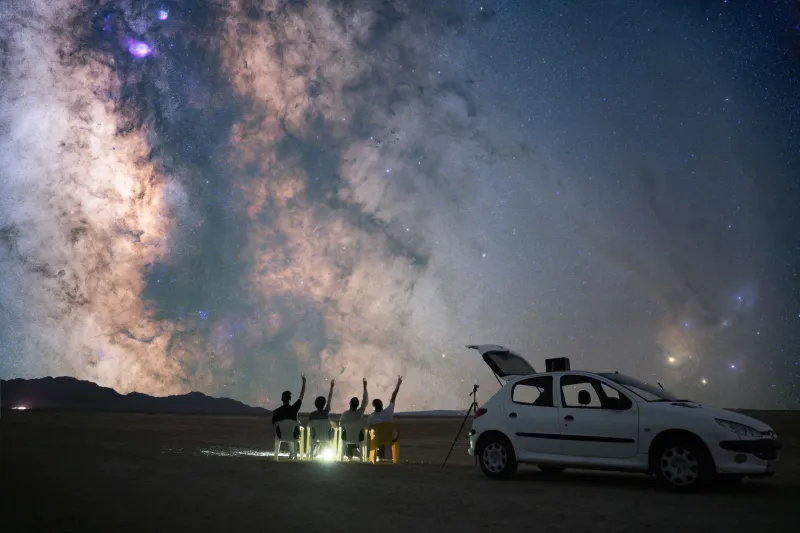
Now, a well-timed post in a large online community — "Perseids peak tonight, anyone else heading out?" — can spark dozens of parallel viewing sessions happening simultaneously across multiple states. People share their locations, their conditions, their counts. Someone in rural Kansas is comparing notes with someone on a rooftop in Denver. It's not a single event. It's a distributed one, and it creates a sense of shared experience that's genuinely new.
Some communities have taken this further, organizing virtual star parties where participants use live video feeds or share real-time photos while talking on voice chat. It sounds like a pale substitute for being outside together, but observers who've participated describe it differently. "I've met people through virtual star parties who I now consider real friends," one participant told us. "We've even planned trips to dark sky sites together."
Democratizing the Night Sky
Perhaps the biggest story here is access. Amateur astronomy has always had a slight gatekeeping problem — not malicious, just structural. Equipment costs money. Dark skies require transportation. Knowledge requires mentors. Clubs require showing up.
Online communities chip away at all of those barriers. Questions get answered for free. Equipment recommendations come from real users, not sales floors. Beginners find their footing without feeling like the least experienced person in a room full of strangers.
And the data bears this out. Astronomy-related subreddits have seen consistent membership growth over the past five years. Astronomy apps like SkySafari and Stellarium routinely rank in the top science app charts. The total number of people who identify as amateur astronomers in the US is genuinely hard to measure, but every indicator points up.
What This Means for the Community
For those of us who care about keeping astronomy alive and growing as a hobby, the rise of digital communities is, on balance, a good thing. More people looking up is more people who care about dark sky preservation, science funding, and passing curiosity down to the next generation.
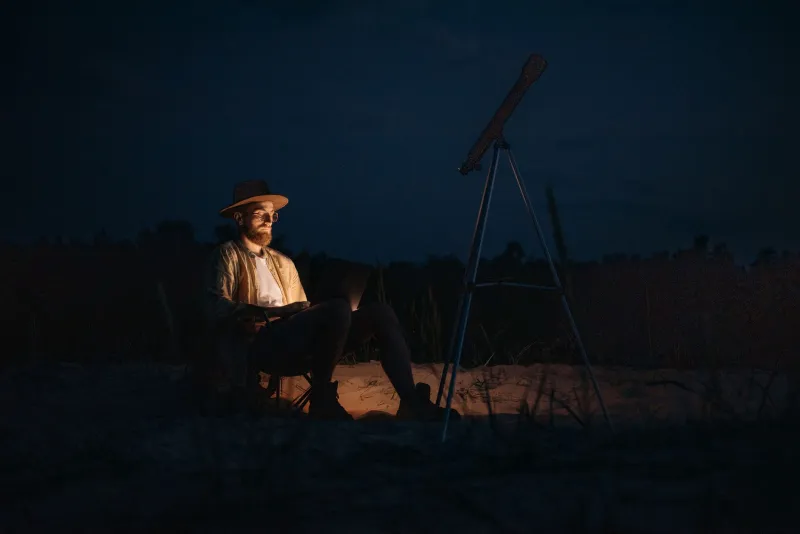
The old model and the new model aren't enemies. The best outcomes happen when a curious person finds an online community, gets hooked, and eventually shows up to a local star party where someone hands them an eyepiece and says, "Take a look."
That handoff — from screen to sky — is where the real magic still lives. But the screen is a pretty great place to start.