Pack Up the Club: A Road Trip Playbook for Astronomy Groups Chasing Dark Skies Across America
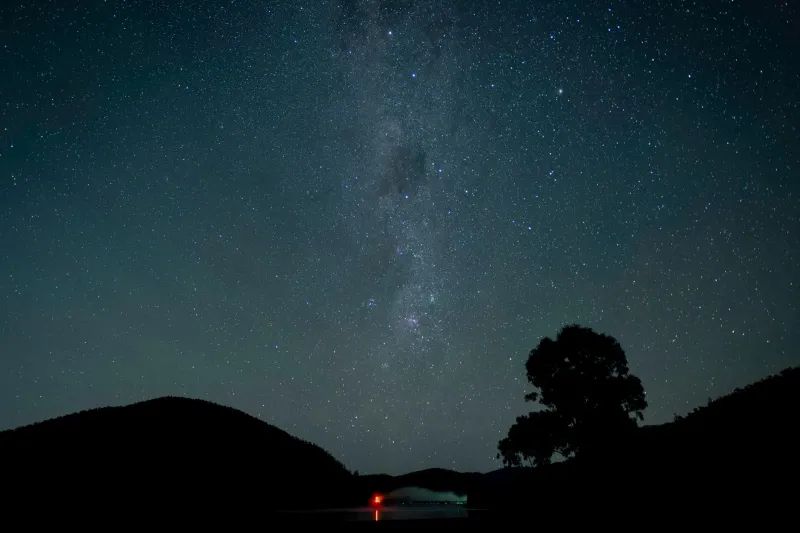
There's a moment that happens on every great astronomy club road trip. You've driven three hours from the suburbs, the cars are parked in a field somewhere in eastern Oregon or the Texas Hill Country, and someone cuts the headlights. The sky drops on you like a curtain — dense, layered, almost overwhelming. Somebody says something quietly. Everybody else just nods.
That moment is worth every logistical headache it takes to get there. And make no mistake: organizing a multi-person stargazing road trip involves real logistical headaches. But with the right framework, they're very manageable ones. Here's how to plan a club astronomy trip that delivers on the promise.
Start With the Sky, Not the Map
The single biggest mistake astronomy groups make when planning a road trip is choosing a destination first and checking the sky conditions second. Do it the other way around.
Your first stop should be a Bortle scale map. Light pollution maps like those available at lightpollutionmap.info show you at a glance where the darkest skies in the US are concentrated. Spoiler: they're generally in the rural West and parts of the rural South and Midwest. But don't just chase the darkest patch you can find — cross-reference that with cloud cover statistics and seasonal weather patterns for the time of year you're planning to travel.
For summer trips, the Great Basin (Nevada, Utah, and eastern Oregon) is hard to beat — dark, dry, and accessible. Fall is prime time for the Colorado Plateau and the Texas Hill Country, both of which combine outstanding skies with genuinely spectacular landscapes. Winter trips are trickier weather-wise, but southern Arizona and New Mexico offer some of the most reliably clear skies in the country from November through March. Spring trips in the Pacific Northwest can be hit or miss with cloud cover, but if you catch a clear night in a place like central Oregon, it's spectacular.
Once you've narrowed your region by sky quality and season, then pull up the map.
Timing Around the Moon
This one cannot be overstated. A full moon will wash out a dark sky site just as thoroughly as a suburb will. Your trip dates need to be built around the lunar calendar, not the other way around.
Aim to schedule your observing nights within five days on either side of a new moon. That gives you a window of genuine darkness during the hours when most of your group will be awake and watching. Use a tool like the US Naval Observatory's moon phase calendar or an app like SkySafari to lock in your target window before you book anything else.
Also factor in what celestial events are happening during your travel window. A meteor shower, a planetary conjunction, or a particularly well-placed Milky Way core can turn a good trip into a legendary one. Check resources like Sky & Telescope's event calendar and build your travel dates around the best possible sky.
Accommodation Strategy for Groups
This is where most club trips run into friction. Hotels work fine for small groups of four or five, but once you're coordinating ten or fifteen people, the math gets complicated and the cost gets prohibitive.
For larger groups, consider these approaches:
Vacation rental houses. Platforms like Vrbo often have large rural properties with multiple bedrooms that can sleep 10 to 16 people at a reasonable per-person cost. Look specifically for properties with large open yards or nearby fields — you're going to want flat, unobstructed space to set up equipment. Message the host in advance to confirm they're okay with late-night activity outside.
Campgrounds with group sites. Many national forests and Bureau of Land Management (BLM) areas in the West have group camping areas designed for exactly this kind of gathering. Recreation.gov lets you search and book group sites. The bonus: no light pollution from a house, and everyone's already outside.
Dark sky parks with camping. Cherry Springs State Park in Pennsylvania, Kartchner Caverns State Park in Arizona, and the McDonald Observatory's Fort Davis area in Texas all have camping options near certified dark sky sites. Some even have dedicated star party infrastructure like telescope pads and red-light-only zones.
Whatever you book, coordinate transportation early. Caravanning as a group is part of the fun, but agree on a rally point before you leave civilization, and make sure everyone has offline maps downloaded — cell service near the best dark sky sites is often nonexistent.
Dividing Roles Before You Leave
A club road trip works best when everyone has a job. Assign roles before departure — not on the night of — and your observing sessions will run far more smoothly.
The navigator/logistics lead manages the route, accommodation check-in, and backup plans if weather forces a pivot.
The equipment coordinator tracks what gear is coming, who's bringing what, and ensures nothing critical (like a red flashlight, extra batteries, or a dew heater) gets left behind.
The sky planner prepares the observing list for each night — what objects are well-positioned, what events to watch for, and what each person or subgroup should focus on.
The photographer handles any astrophotography setup and coordinates with the group to minimize stray light during long exposures.
The social lead handles the group chat, documents the trip, and is responsible for making sure newer members feel included and engaged.
This doesn't need to be formal — just a quick email thread or group chat agreement a week before departure. But having clear ownership of each area prevents the kind of on-site confusion that eats into observing time.
Top Regional Destinations Worth Building a Trip Around
Here are a few destinations that astronomy clubs have found particularly rewarding:
Big Bend National Park, Texas. One of the most remote parks in the lower 48, with Bortle Class 1 skies and an active astronomy program. The park hosts a star party each year and has ranger-led astronomy events. It's a long drive from anywhere, which is exactly why the skies are so good.
Craters of the Moon National Monument, Idaho. An alien landscape under extraordinary skies, with BLM land on the edges that offers even more open observing space. Summer nights here are genuinely stunning.
Great Basin National Park, Nevada. Wheeler Peak Campground sits at nearly 10,000 feet, putting you above a significant chunk of the atmosphere. The park has an annual astronomy festival in September that draws clubs from across the region.
Natural Bridges National Monument, Utah. The first International Dark Sky Park ever designated, and it still earns the designation. Centrally located within a short drive of several other Utah parks, making it a natural hub for a multi-day trip.
Making the Most of the Drive
Don't sleep on the road trip itself as part of the experience. A long drive through rural America with a car full of astronomy friends is its own kind of fun. Put together a playlist of space-themed music or podcasts. Stop at roadside observatories or science museums along the way. Make the journey part of the story.
And when you finally kill the headlights in that dark field, and the sky drops on you — you'll know it was worth every mile.