Never Miss a Meteor Again: How to Build Your 2025 Astronomy Calendar the Smart Way
Let's be honest: the night sky doesn't care about your schedule. A stunning planetary conjunction might peak on a Tuesday at 3 a.m. A meteor shower could hit its stride right when you're buried in a work deadline. And if you're relying on a random social media post to tip you off, there's a good chance you'll see the recap photos the morning after—beautiful, heartbreaking, and completely useless.
The good news? A little upfront planning goes a long way. Building a personalized astronomy calendar for 2025 means you stop reacting to the sky and start anticipating it. And once you've got a system that works for your location, your gear, and your actual interests, you'll be amazed how many more moments you actually catch.
Here's how to put that system together.
Start With a Master List of 2025 Events
Before you set a single alert, get a bird's-eye view of what's coming. A handful of go-to sources publish detailed annual sky calendars that are accurate, well-organized, and free.
Sky & Telescope (skyandtelescope.org) puts out monthly observing highlights and maintains a running list of major events. EarthSky is another community favorite—their coverage is accessible without being dumbed down, and they update frequently. For a more data-heavy approach, the U.S. Naval Observatory and NASA's Jet Propulsion Laboratory both publish event tables that serious planners swear by.
Spend an hour in early January scrolling through these resources and pulling out the events that genuinely excite you. Not everything on the list needs to go on your calendar. A lunar occultation of a dim star might be fascinating to one observer and completely irrelevant to another. Own your priorities.
Pick Your Alert Tools (And Don't Overcomplicate It)
Once you know what you're watching for, the next step is choosing how you want to be reminded. There's no single right answer here—it depends on how you like to receive information.
Apps worth downloading:
- SkySafari (free and paid tiers) lets you set observing session reminders tied to specific objects and events. The paid version adds more depth, but the free version is genuinely useful for most casual observers.
- Stellarium Mobile is another solid option, especially for visualizing what the sky will look like at a specific date and time from your exact location.
- Clear Outside and Clear Dark Sky aren't event trackers per se, but they're essential for checking whether your skies will actually cooperate on the nights that matter. Pairing an event alert with a weather check is the move.
- Heavens-Above is older-looking but incredibly detailed—great for tracking satellite passes, ISS flyovers, and less-publicized sky events.
Email newsletters:
If you'd rather not add more apps to your phone, a curated email subscription can do the job just as well. EarthSky's newsletter delivers regular sky event roundups straight to your inbox. Sky & Telescope also offers email alerts. The key is to actually read them—set a folder filter so they don't get buried.
Community-driven calendars:
Don't underestimate the value of your local astronomy club's event calendar. Many clubs affiliated with the Astronomical League or regional societies maintain their own observing schedules, and they're often tailored to your geographic area in ways that generic apps can't match. If your club uses a shared Google Calendar or a platform like Meetup, subscribe to it. You'll catch local star parties, dark sky trips, and club observing nights you might otherwise miss.
Customize by Location, Equipment, and Interest
Here's where most people leave value on the table: they use default settings. A generic astronomy app set to "New York City" isn't going to serve you well if you're actually observing from rural Tennessee. Take twenty minutes to configure your tools properly.
Location matters more than people realize. Planetary rise and set times, ISS pass windows, and even the visibility of certain meteor shower radiant points all vary by latitude and longitude. Every app mentioned above will let you set a precise location—use it.
Match alerts to your equipment. If you're working with binoculars, a faint 11th-magnitude comet probably isn't worth a 2 a.m. alarm. But a bright Jupiter opposition or a Perseid peak? Absolutely. Think about what your gear can actually show you and filter your alerts accordingly.
Narrow down by interest. Are you a lunar observer? Focus your calendar on moon phases, libration events, and occultations. More into planetary work? Build your year around oppositions and conjunctions. If meteor showers are your thing, mark the Quadrantids (January), Perseids (August), and Geminids (December) as non-negotiables and work outward from there.
Build It Into Your Actual Calendar
This part sounds obvious, but it's where most plans fall apart. Knowing that the Perseid meteor shower peaks August 11–12 is useless if you haven't blocked off the evening. Put it in your phone calendar. Set a reminder a week out so you can plan logistics—driving to a darker site, inviting friends, checking the weather forecast.
For major events, consider setting two reminders: one a week ahead and one the morning of. That way, even if life gets busy, you've got a backup nudge.
If you're part of an astronomy group or club, share your calendar with them. One of the best things about this hobby is the community around it, and coordinating with friends who share your enthusiasm makes the actual observing nights way more fun. There's a reason so many of us got hooked on stargazing the first time we saw Saturn's rings through someone else's telescope at a star party.
A Few 2025 Highlights to Anchor Your Calendar
To give you a starting point, here are some events worth circling right now:
- Quadrantid Meteor Shower – peaks early January, often underrated because of winter cold, but can be spectacular
- Total Lunar Eclipse – check NASA's eclipse page for exact dates and visibility from your region
- Perseid Meteor Shower – mid-August, one of the most reliable and beloved annual events
- Saturn at Opposition – expect great ring views through even a modest telescope
- Geminid Meteor Shower – mid-December, consistently one of the year's best displays
This isn't a complete list—it's a skeleton. Fill in the rest based on what gets you excited.
The Payoff: Becoming an Intentional Observer
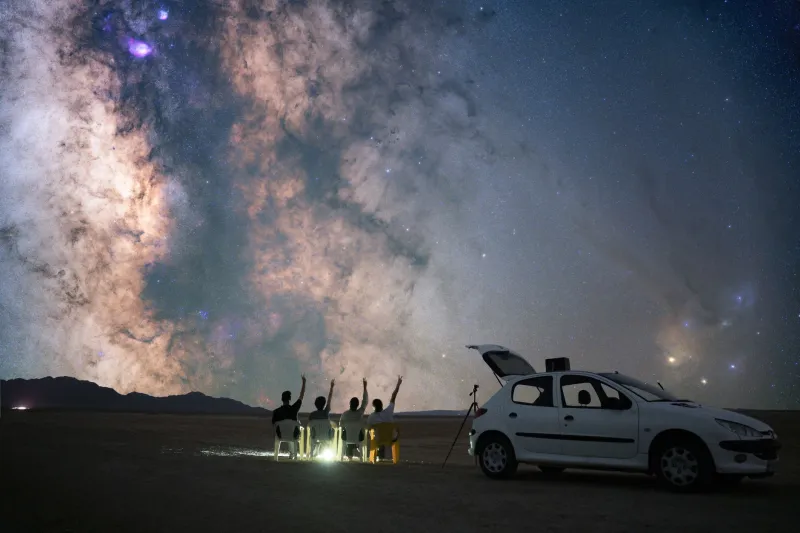
There's a real difference between someone who occasionally looks up when they hear a meteor shower is happening and someone who planned for it three weeks out, drove to a dark sky site, and watched 80 Perseids arc across the Milky Way while the rest of the neighborhood slept.
Building your astronomy calendar isn't about obsessing over every minor sky event. It's about deciding in advance which moments matter to you—and then actually showing up for them. The sky rewards preparation. And honestly, so does the community around it.
So open a tab, pull up your favorite sky event resource, and start building. 2025 has a lot to offer. Don't let it slip by on your phone's "Later" list.