How to Plan a Multi-Day Stargazing Retreat That Actually Delivers
Somewhere between your third consecutive cloudy Friday night and your fourteenth scroll through someone else's astrophotography on Instagram, a thought creeps in: what if I just went somewhere? Somewhere dark. Somewhere with other serious observers. Somewhere that isn't your backyard.
That instinct is worth following. Multi-day stargazing retreats—whether you organize one yourself or join an existing event—have a way of compressing months of casual learning into a single transformative weekend. Experienced observers will tell you there's a before and an after. This guide is your roadmap to making it happen.
Start With the Sky: Finding the Right Dark Sky Location
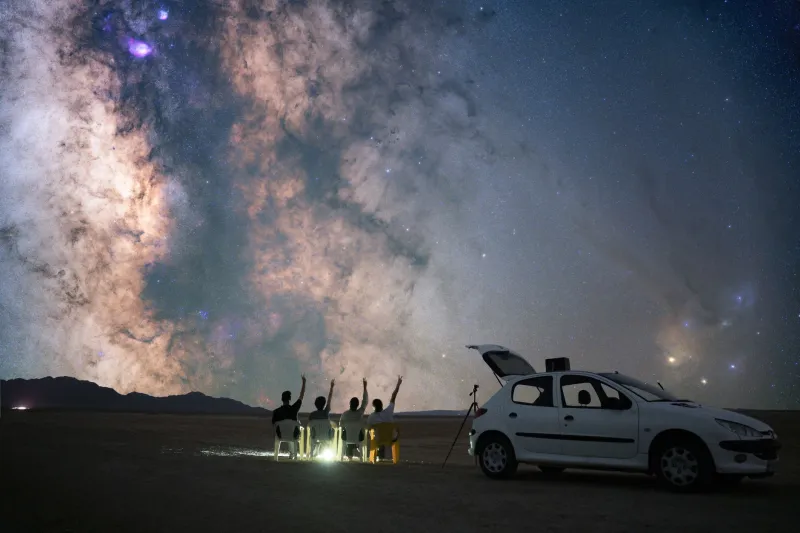
The whole point of leaving home is getting away from light pollution, so location selection isn't a detail you can treat as an afterthought. The Gold Standard Bortle scale is your friend here. You're looking for a site rated Bortle 3 or lower—that's where the Milky Way starts looking genuinely dramatic rather than like a faint smudge.
In the US, you have excellent options. Cherry Springs State Park in north-central Pennsylvania is one of the most celebrated dark sky sites in the eastern half of the country and has dedicated astronomy fields. McDonald Observatory's surrounding territory in west Texas puts you under some of the darkest skies in the continental US. In the west, Great Basin National Park in Nevada and the high desert around Flagstaff, Arizona offer exceptional conditions and existing astronomy infrastructure.
For smaller, more intimate retreats, look into private ranches and rural campgrounds in areas with low population density. Many landowners in places like eastern Oregon, the Nebraska Sandhills, and the Texas Hill Country are genuinely happy to host astronomy groups—sometimes for very reasonable fees.
When evaluating a site, think beyond darkness. Check for flat, stable ground for tripods. Confirm there's no nearby highway lighting or reflective signage. Factor in elevation, since higher altitude means less atmospheric interference. And always check historical weather data for your target weekend—clear skies in October in the Sierra Nevada are a different proposition than clear skies in July.
The Logistics That Make or Break a Retreat
Once you have a location, the organizational work begins. For a group of six to twenty people—a good size range for a first retreat—here's what needs to get sorted.
Accommodation. Decide early whether you're camping or renting lodging. Camping keeps costs low and maximizes time under the sky, but not everyone is prepared for three nights in a sleeping bag in October. A rented cabin or farmhouse gives people a warm base to retreat to between sessions and makes the experience more accessible to members who are newer to extended outdoor nights. Many groups do a hybrid: tent camping for the hardcore crowd, with an indoor option for those who need it.
Equipment coordination. This is where retreats get genuinely exciting. A group of fifteen observers might collectively own several quality telescopes, a range of eyepieces, tracking mounts, laser pointers, and more. Build a shared gear spreadsheet before the trip. Assign someone to be the equipment coordinator. Make sure everyone knows what they're responsible for bringing and what they can borrow. If anyone has a high-quality wide-field scope, prioritize getting it to the site—it becomes the social hub of the night, the thing everyone lines up to look through.
Scheduling. Don't over-program. The best retreats have structure during the day—workshops, gear talks, discussion of targets for that night—and open sky time after dark. Plan for a late-night session from sunset to around 1 or 2 a.m., then a rest period, then optional pre-dawn viewing for the early risers who want to catch planets or deep-sky objects in the eastern sky. Leave room for things to evolve organically.
Food and supplies. Red-light headlamps for everyone. Warm layers even if the forecast looks mild—temperatures drop fast in dark-sky territory. Enough food and coffee to sustain people who are awake until 3 a.m. Assign a meal coordinator or rotate cooking duties. Someone always forgets snacks; that person should not be you.
What Actually Happens at a Great Retreat
Here's what veteran retreat-goers consistently report: the skill acceleration is real, and it's faster than almost anyone expects.
When you spend multiple nights in a row under genuinely dark skies, surrounded by observers with varying levels of experience, your eyes adapt in ways they simply can't during a single backyard session. You start to see fainter objects. Your star-hopping instincts sharpen. You learn to use averted vision almost automatically.
But the bigger leap is social. Watching an experienced observer track down a faint galaxy cluster with casual efficiency teaches you something no YouTube tutorial can replicate. Troubleshooting a mount problem with someone who's seen it before saves you hours of frustration. And having a conversation at 2 a.m. about what you're both seeing through a 12-inch Dobsonian is the kind of shared experience that turns acquaintances into genuine friends.
Joining an Existing Event vs. Organizing Your Own
If the logistics of organizing feel overwhelming, don't start from scratch. The US has a robust calendar of established star parties that welcome newcomers. The Texas Star Party, held annually in the Davis Mountains, is one of the largest and most respected in the country. Oregon Star Party in the Ochoco Mountains draws serious observers from across the Pacific Northwest. The Winter Star Party in the Florida Keys offers a warmer option for observers who'd rather not freeze.
Attending an established event first is genuinely valuable—you'll see how these things are run, make connections, and come home with a clear sense of what you'd want to replicate (or improve) in your own organized retreat.
If you're ready to plan your own, start small. A four-to-eight person weekend at a dark sky campground within a three-hour drive of your club is a completely manageable first step. Get one successful retreat under your belt, and the next one almost plans itself.
The Lasting Effect
People who've attended a serious multi-day stargazing retreat tend to describe it as a turning point. Not necessarily because of any single object they observed or any technical skill they acquired, but because of what it did to their sense of belonging in the astronomy community.
There's something about spending two or three nights under real darkness with people who care as much as you do—sharing a thermos at midnight, arguing cheerfully about eyepiece choices, watching someone see Saturn's rings for the first time—that changes your relationship to the hobby in a lasting way.
The night sky is extraordinary on its own. But experienced with the right people, in the right place, over multiple nights? It becomes something else entirely.