Strength in Numbers: Why Astronomy Clubs Catch What Solo Stargazers Miss
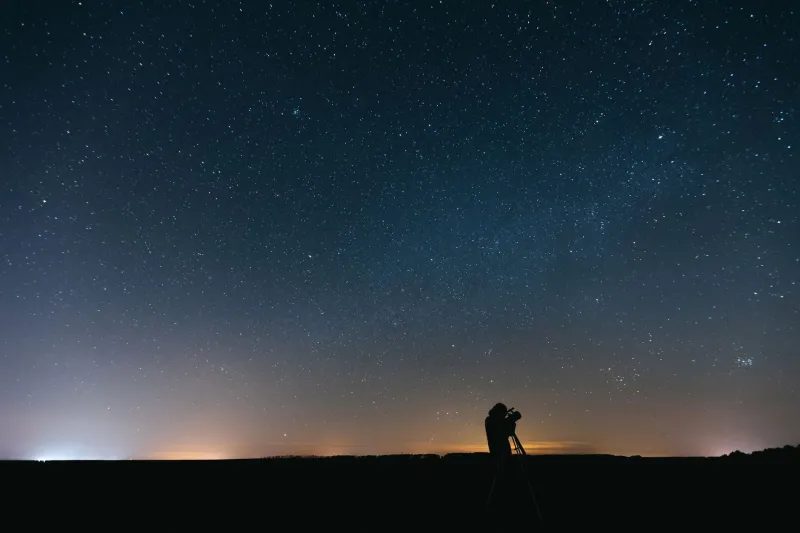
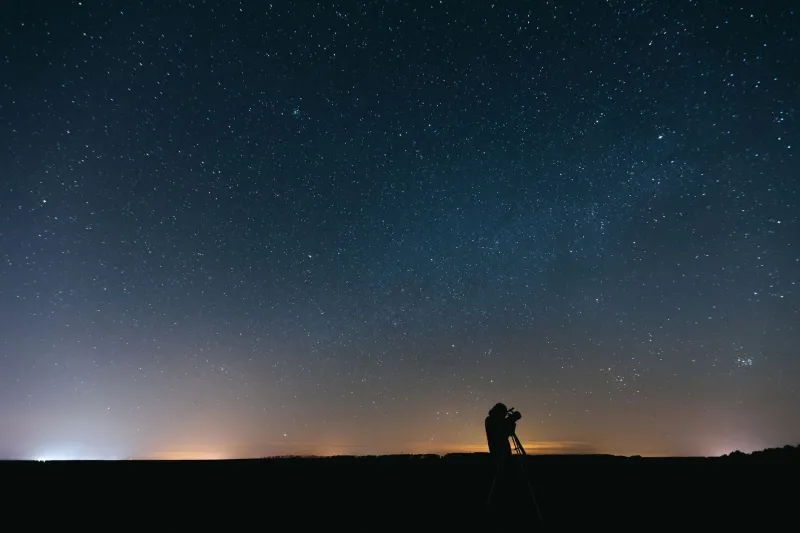
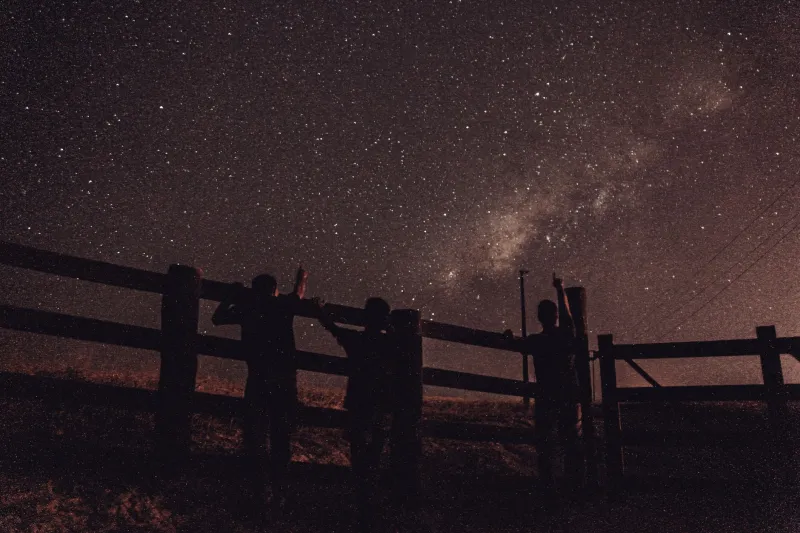
Picture this: it's 2 a.m., you're alone in your backyard, your coffee has gone cold, and you're scanning a patch of sky that looks exactly the same as it did an hour ago. You're probably going to pack it in soon. Now picture the same night, but with seven other people spread across a field, each covering a different section of sky, someone calling out coordinates every few minutes, and a group chat buzzing with real-time updates. Same sky. Completely different outcome.
That gap — between what a solo observer catches and what an organized group catches — isn't just about having more eyeballs. It's about something deeper: the way coordinated human attention, shared knowledge, and collective memory fundamentally change what's possible on a dark night.
The Cognitive Case for Group Observing
Human attention has hard limits. We can only sustain focused vigilance on a single area for so long before our brains start tuning out. Researchers studying sustained attention tasks have found that performance drops significantly after just 20 to 30 minutes of unbroken concentration — a phenomenon sometimes called the "vigilance decrement." For a solo stargazer watching for a transient event like a supernova brightening or an asteroid occultation, that's a serious problem.
Group observing sidesteps this constraint in a couple of ways. First, it distributes the cognitive load. When six observers are each responsible for a specific region of sky, each person's attention stays fresher longer. Second, groups create what psychologists call "social facilitation" — the tendency to perform better on tasks when others are present and engaged. When your club buddy just called out a faint streak in Virgo, you're suddenly a lot more alert than you were five minutes ago.
There's also the matter of confirmation bias. Solo observers are vulnerable to second-guessing themselves. Did that star just flicker, or was it atmospheric turbulence? Is that a new point of light, or did I just not notice it before? In a group, you can immediately ask someone else to look. That real-time cross-checking dramatically reduces both false positives and missed detections.
Real Discoveries Made by Amateur Clubs
This isn't just theory. Amateur astronomy groups in the US and around the world have racked up an impressive list of genuine scientific contributions — many of them specifically enabled by organized, coordinated observation.
The American Association of Variable Star Observers (AAVSO), headquartered in Cambridge, Massachusetts, has coordinated amateur observers for over a century. Their network has contributed hundreds of thousands of observations that professional astronomers have used to track stellar behavior over timescales no single observatory could manage alone. When a star behaves unexpectedly — brightening, dimming, or pulsing in unusual patterns — it's often an alert from an AAVSO contributor that kicks off the professional follow-up.
Supernovae are another area where clubs shine. In 2016, a team of amateur observers in Australia made headlines by catching a supernova in real time — something that had never been recorded before. Their success wasn't accidental. It was the result of a systematic, multi-person monitoring program targeting a specific galaxy. No single observer staying up late on a whim would have been in position to capture that event.
Occultations — those brief, dramatic moments when an asteroid or the Moon passes in front of a distant star — are particularly well-suited to group observation. Because an occultation's path across Earth's surface is narrow (sometimes only a few miles wide), timing it accurately requires observers spread across a region. Astronomy clubs in states like Texas, Colorado, and California have coordinated exactly these kinds of multi-site campaigns, generating data that helps scientists refine the shapes and sizes of near-Earth asteroids.
Shared Expertise Changes Everything
Beyond the mechanics of attention, there's another reason clubs outperform solo observers: the knowledge base is simply bigger.
Every astronomy club has its specialists. There's the person who knows every Messier object by heart. There's the one who can rattle off the current positions of Jupiter's moons from memory. There's the equipment nerd who can diagnose a collimation problem in 30 seconds. When those people are in the same field on the same night, that expertise flows freely.
For spotting rare events, this matters enormously. Recognizing that a star in Perseus looks slightly brighter than it did last month requires a baseline of familiarity with that part of the sky — the kind of familiarity that builds over years of regular observation. In a club, you don't need every member to have that depth. You just need one person who does, and who's paying attention.
There's also the equipment factor. A solo observer is limited to whatever gear they own. A club night might bring together a 6-inch refractor, a 12-inch Dobsonian, a pair of high-powered binoculars, and someone running a dedicated sky-monitoring camera. Each instrument has different strengths. Together, they cover a wider range of targets and detection thresholds than any single setup could.
Coordinated Strategy: The Secret Weapon
Maybe the biggest advantage clubs have is the ability to plan. A well-organized astronomy group doesn't just show up and look around. They divide the sky intentionally, assign target lists, set check-in intervals, and debrief afterward.
This kind of structured approach mirrors what professional observatories do with survey programs — think of the way projects like the Vera C. Rubin Observatory's LSST are designed to systematically sweep the sky rather than point randomly. Amateur clubs can apply the same logic on a smaller scale. Assign three people to monitor known variable stars. Send two others to track a predicted meteor shower radiant. Have one person running a wide-field camera to catch anything unexpected.
When you operate that way, you're not just stargazing — you're running an observation campaign. And observation campaigns catch things.
Why This Matters for You
If you're currently a solo stargazer, none of this is meant to make you feel like you're doing it wrong. Solo observing has its own rewards — the quiet, the personal connection with the sky, the freedom to follow your curiosity wherever it leads. But if you want to be part of something that actually moves the needle scientifically, if you want a real shot at catching a supernova or timing an occultation that contributes to published research, a club changes your odds dramatically.
The Astronomy Friends community exists precisely because the sky is better shared. Not just emotionally, though that's real too — but scientifically, strategically, and cognitively. When you observe with others, you become part of a system that's genuinely more capable than the sum of its parts.
The night sky has been surprising people for thousands of years. The best way to be ready for the next surprise? Don't watch it alone.